\r\n \r\n \r\n Actualités & Blog – Lentilles Optiques Chine
Fournisseur professionnel chinois de moules de lentilles optiques & Inserts optiques & Moulage optique & Revêtement optique
Capacités Optiques Avancées
English中文(简体)FrançaisРусскийEspañol
Actualités & Blog
» News & Blog

Actualités & Blog

Practical engineering guides from Silver Optics covering polymer and glass optical components, precision mold tooling, moulage par injection optique, revêtement optique, inspection planning and RFQ preparation. Explore design and procurement considerations for custom optics projects.

Composants de lentilles d'endoscope médical de précision en cours d'inspection

Optiques pour endoscopes médicaux: Questions de qualification des fournisseurs

Septembre 15, 2026

Medical endoscope optics combine small geometry, tight packaging and demanding image requirements. Supplier qualification should therefore examine how optical, mechanical and process requirements are translated into controlled production evidence. The questions below help engineering and sourcing teams prepare a focused review. Is the Requirement Package Complete? Provide the optical prescription or performance target, drawings, material specifications, coating requirements, assembly interfaces, …

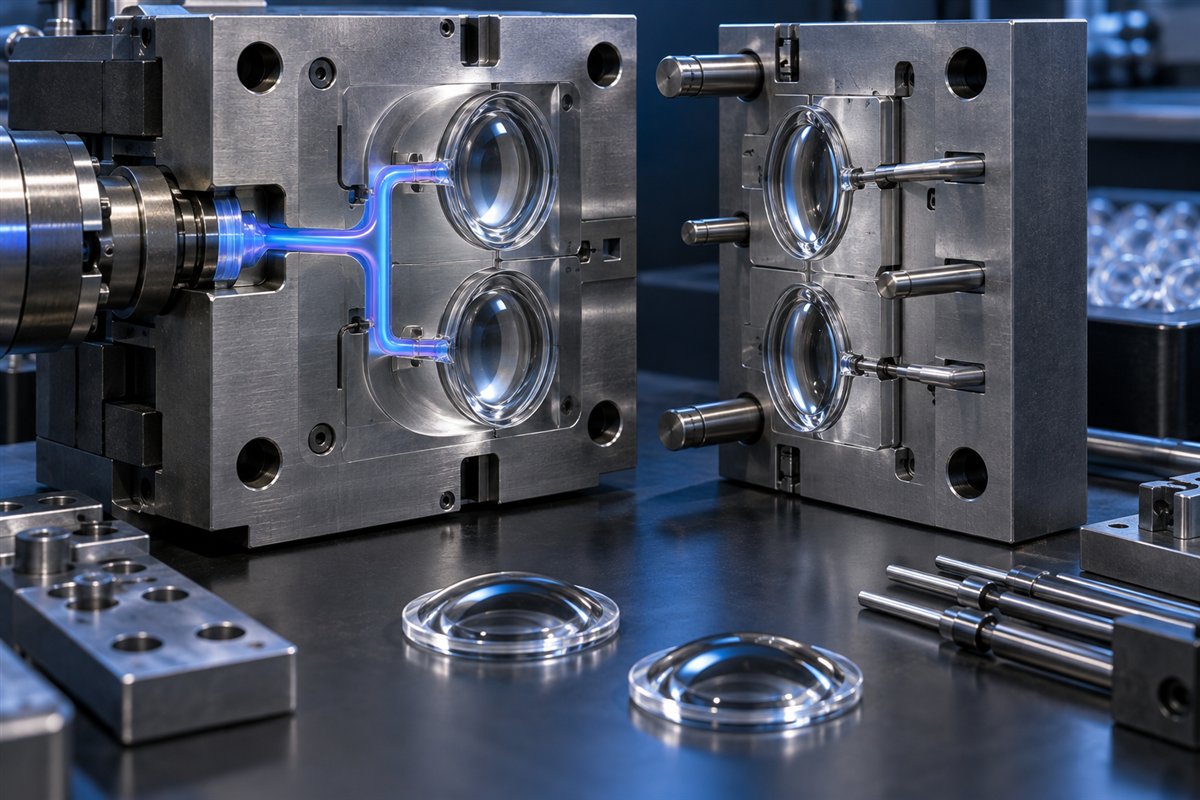
Precision optical injection mold with lens cavities and gate layout

Conception de moules d'injection optique: Porte, Planification des évents et de l'éjection
Septembre 15, 2026

For molded optical parts, the production tool is part of the optical system. Gate position, venting, cooling, ejection and insert design can influence flow marks, birefringence, warpage, surface replication and cycle stability. These decisions should be reviewed while the lens and housing interfaces are still adjustable. Connect Mold Design to the Optical Requirement The mold team needs more than a …

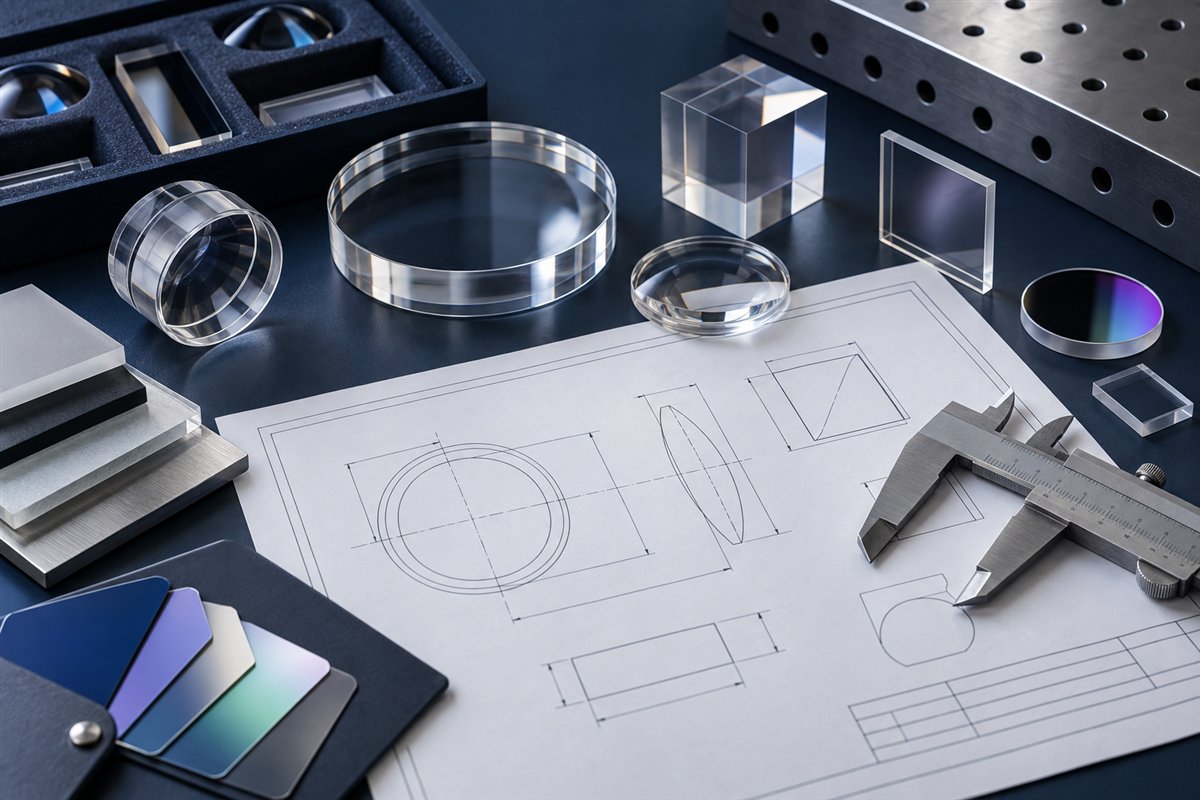
Custom optical components with drawing and RFQ inputs

Liste de contrôle RFQ pour composants optiques personnalisés pour un devis plus rapide
Septembre 15, 2026

A complete RFQ helps an optical supplier evaluate feasibility, tooling, inspection and cost without filling critical gaps with assumptions. It also produces quotations that are easier to compare because each supplier is working from the same requirement set. 1. Identify the Part and Program Stage State the part name, application and development stage: concept, feasibility, prototype, pilot or released production. …

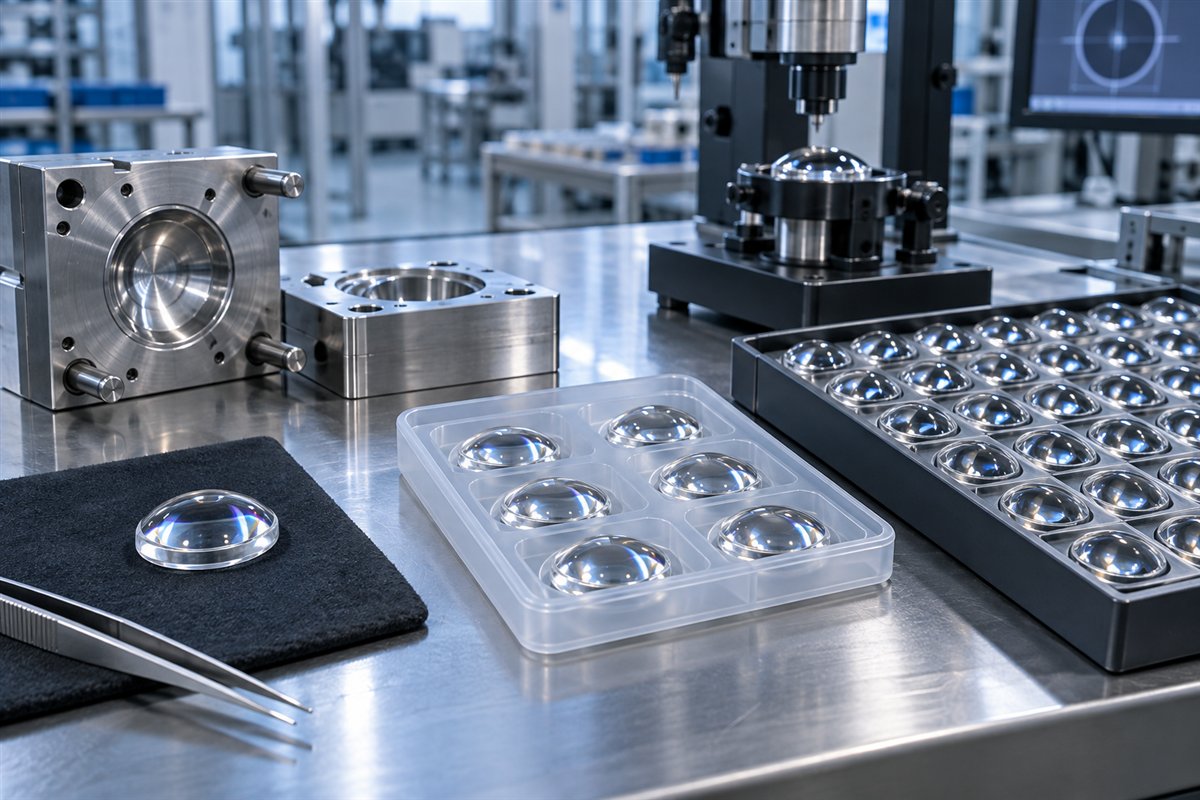
Optical lens prototype pilot batch and mass production transfer

Du prototype optique à la production de masse: Une liste de contrôle pour le transfert
Septembre 15, 2026

Moving an optical component from prototype to mass production requires more than increasing quantity. The team must convert design intent, trial knowledge and test results into controlled drawings, tooling, processes and inspection methods. A structured transfer reduces late changes and unclear acceptance decisions. Freeze the Controlled Requirement Set Collect the released 3D model, optical drawing, material specification, coating requirement, assembly …

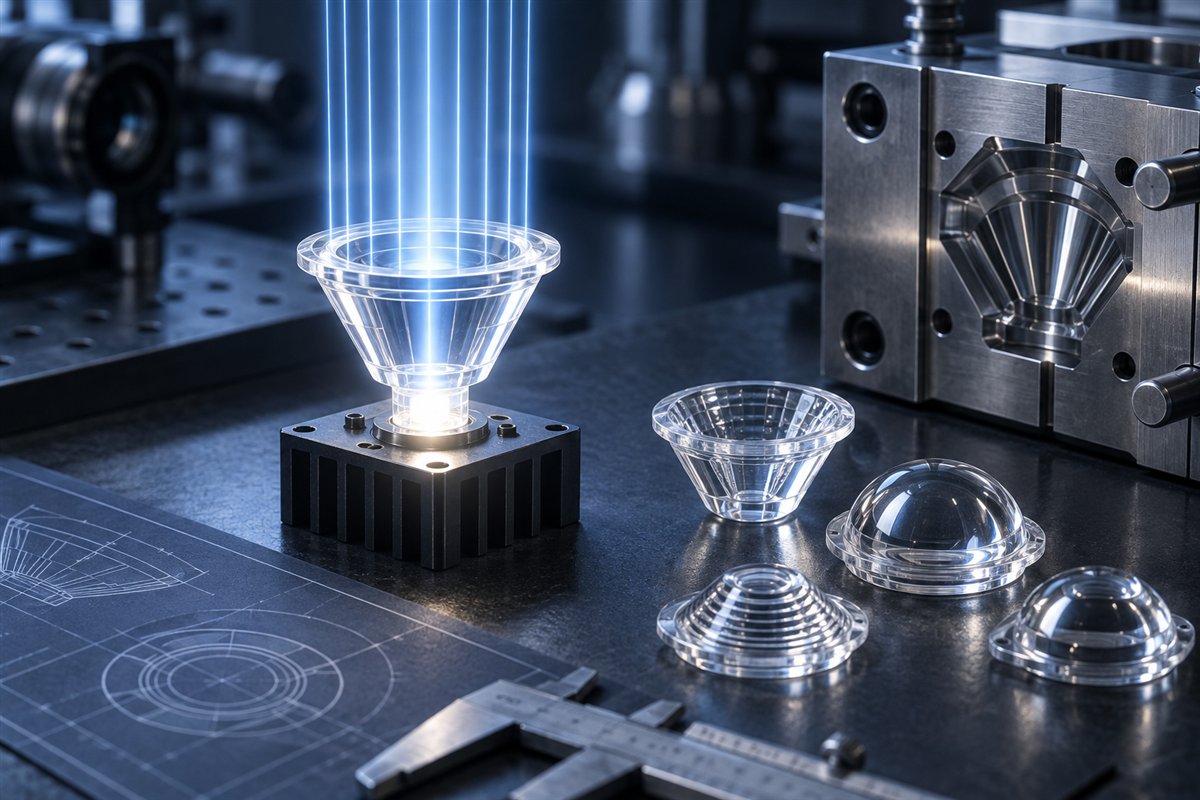
Molded LED collimator lenses with controlled light output

Conception de lentille collimateur LED pour production moulée

Septembre 15, 2026

An LED collimator lens turns light from a finite source into a controlled beam. The final result depends on the LED emission pattern, source size, lens geometry, material, surface quality and assembly position. Designing for molded production early helps avoid a lens that performs in simulation but is difficult to tool, mold or align. Use Accurate LED Source Data Start …

Optiques d'éclairage automobile: Liste de contrôle DFM pour composants moulés

Optiques d'éclairage automobile: Liste de contrôle DFM pour composants moulés

Septembre 15, 2026

Molded automotive lighting optics must connect photometric performance with material behavior, tooling, assembly and environmental validation. Early DFM reduces the risk of redesign after the optical surfaces, mounting features and lamp package have already been fixed. Define the Lighting Function and Test Conditions State whether the component forms, spreads, guides or redirects light. Provide the LED source model, wavelength or …

Contrôle de la lumière parasite dans les systèmes d'imagerie compacts

Contrôle de la lumière parasite dans les systèmes d'imagerie compacts

Septembre 15, 2026

La lumière parasite est toute lumière non désirée qui atteint le détecteur ou le plan image. Dans les appareils photo compacts, les modules de vision industrielle et les systèmes de détection, elle peut réduire le contraste, créer des éblouissements ou des images fantômes et masquer des détails faibles. Un bon contrôle nécessite la coopération entre la conception optique, la conception mécanique, le revêtement et la fabrication. Identify the Stray-Light Paths Begin with the intended field of view and the strongest …

Anti-reflection coated molded plastic optical lenses

Anti-Reflection Coating for Plastic Lenses: Specification Guide

Septembre 15, 2026

Anti-reflection coating can improve transmission and reduce unwanted reflections, but a useful specification must reflect the plastic substrate and the real operating environment. A coating developed for glass cannot automatically be transferred to a polymer lens because temperature limits, surface chemistry, moisture behavior and mechanical stress are different. Define the Substrate First State the exact resin family and grade whenever …

Tolérances des lentilles optiques: Que spécifier sur une demande de cotation (RFQ)

Tolérances des lentilles optiques: Que spécifier sur une demande de cotation (RFQ)

Septembre 15, 2026

An optical lens RFQ is easier to quote and manufacture when the drawing separates performance-critical requirements from general preferences. Overly broad or unnecessarily tight tolerances can increase tooling, inspection and production cost without improving the final system. The goal is to define what the assembled optical system needs and give the supplier a clear method for verifying it. Separate Optical …

Precision polymer optical lens samples for material selection

Optical Plastic Material Selection: PMMA, PC, COP and COC

Septembre 15, 2026

Selecting an optical plastic is an engineering decision that affects optical performance, mechanical reliability, tooling, molding stability and total program cost. PMMA, polycarbonate (PC), cyclic olefin polymer (COP) and cyclic olefin copolymer (COC) can all be used for optical parts, but they solve different problems. This guide gives product engineers and sourcing teams a practical framework for comparing these materials …

Revêtement optique pour lentilles en verre: Considérations de conception et de demande de devis

December 23, 2016

An optical coating request should connect the required spectral performance with the actual glass component, its operating environment and the agreed inspection method. A short request such as “AR coating required” leaves important questions unanswered. Clear input at the RFQ stage helps the coating and component teams review feasibility, measurement conditions and acceptance criteria together. Define the optical requirement first …

Conception de lentilles asphériques pour le moulage par injection: Considérations DFM

Conception de lentilles asphériques pour le moulage par injection: Considérations DFM

December 23, 2016

Designing an aspheric lens for injection molding requires optical performance and manufacturing feasibility to be reviewed together. A lens prescription may define the optical surfaces, but a production-ready request also needs material, mechanical, inspection and volume information. Bringing these inputs together early helps the engineering team evaluate tooling access, molding risks and the most practical validation route. Start with the …

  • Services & Capacités

  • Ressources

    • Actualités
    • Blogs
    • Études de cas
    • Téléchargement