中国专业光学镜片模具及光学组件及光学成型及光学镀膜供应商
先进光学能力



» News & 博客
新闻 & 博客
Practical engineering guides from Silver Optics covering polymer and glass optical components, precision mold tooling, optical injection molding, optical coating, inspection planning and RFQ preparation. Explore design and procurement considerations for custom optics projects.
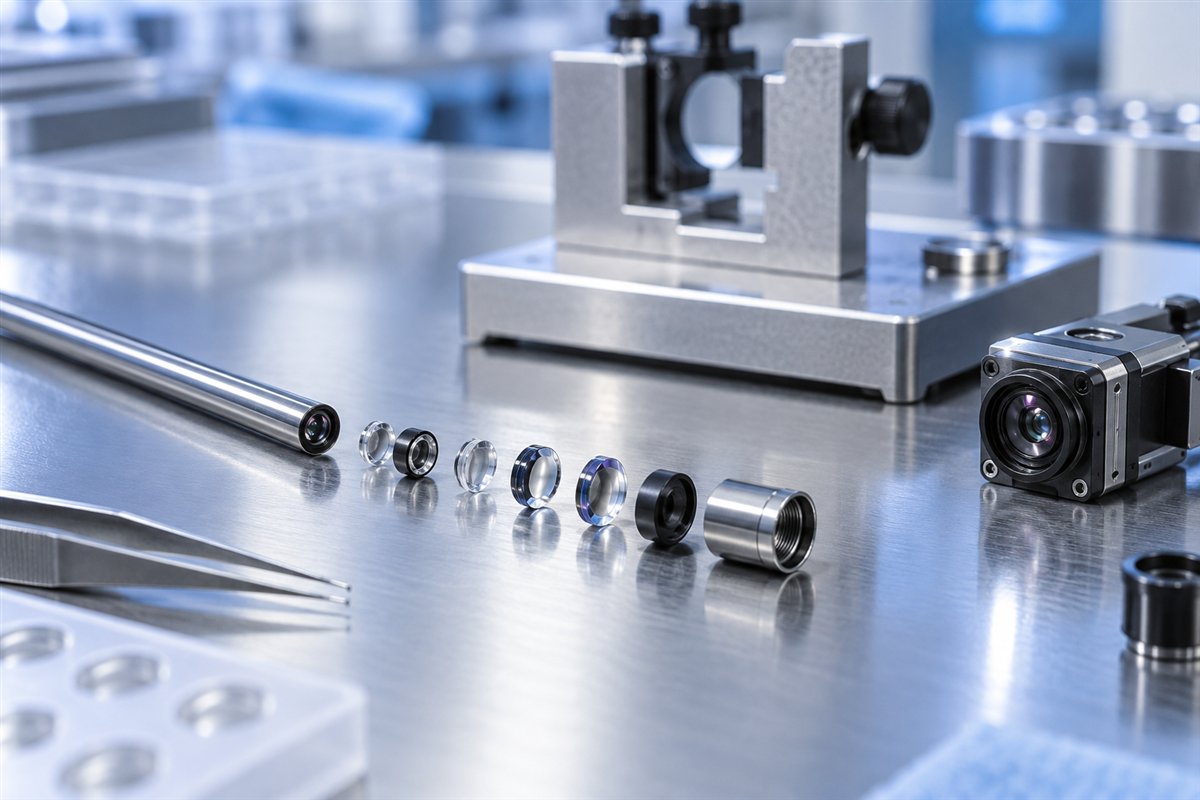
医疗内窥镜光学: 供应商资格问答
9 月 15, 2026
Medical endoscope optics combine small geometry, tight packaging and demanding image requirements. Supplier qualification should therefore examine how optical, mechanical and process requirements are translated into controlled production evidence. The questions below help engineering and sourcing teams prepare a focused review. Is the Requirement Package Complete? Provide the optical prescription or performance target, drawings, material specifications, coating requirements, assembly interfaces, …
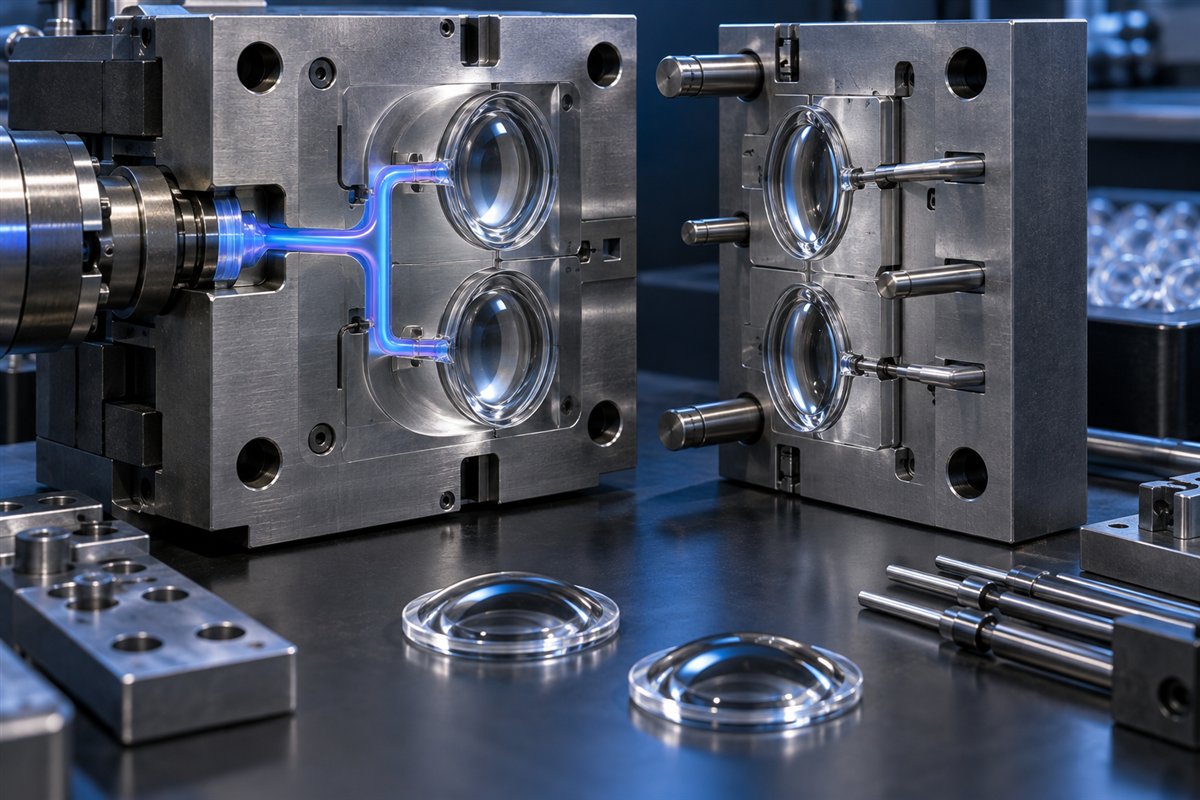
光学注射模具设计: 浇口, 通气与顶出规划
9 月 15, 2026
For molded optical parts, the production tool is part of the optical system. Gate position, venting, cooling, ejection and insert design can influence flow marks, birefringence, warpage, surface replication and cycle stability. These decisions should be reviewed while the lens and housing interfaces are still adjustable. Connect Mold Design to the Optical Requirement The mold team needs more than a …
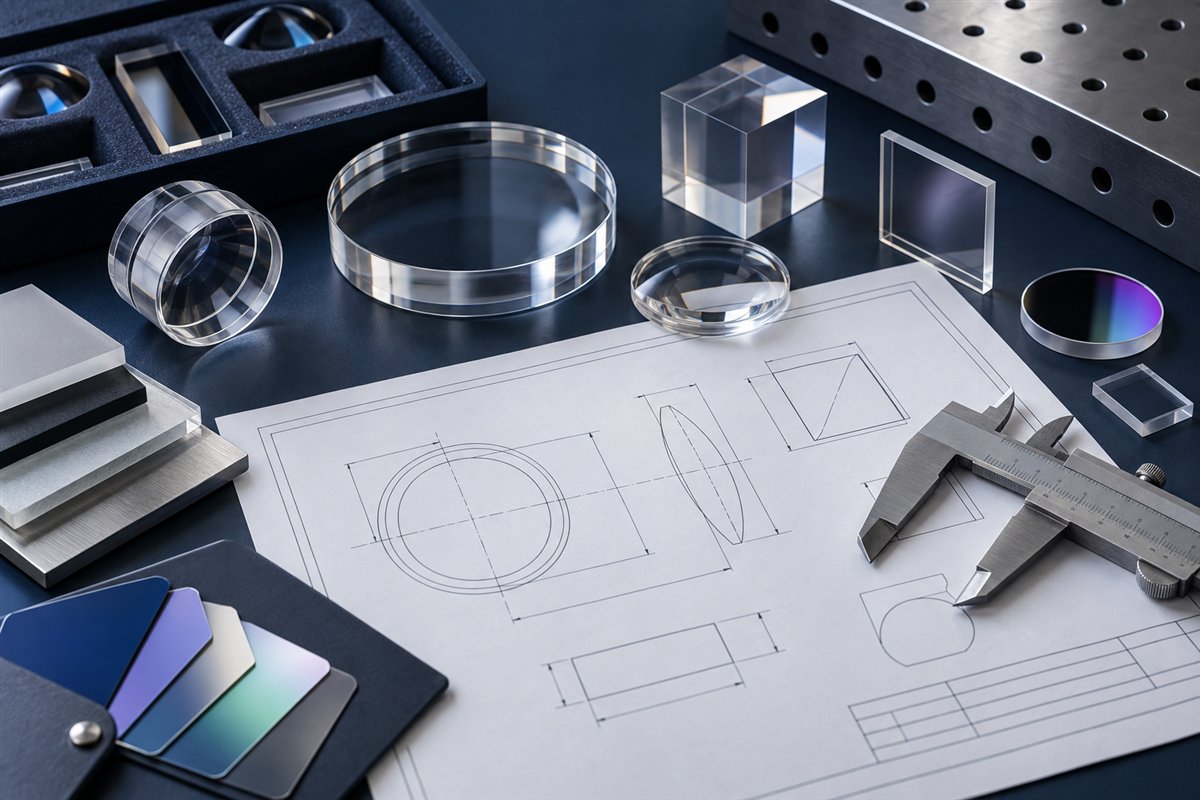
定制光学元件报价单清单以加快报价
9 月 15, 2026
A complete RFQ helps an optical supplier evaluate feasibility, tooling, inspection and cost without filling critical gaps with assumptions. It also produces quotations that are easier to compare because each supplier is working from the same requirement set. 1. Identify the Part and Program Stage State the part name, application and development stage: concept, feasibility, prototype, pilot or released production. …
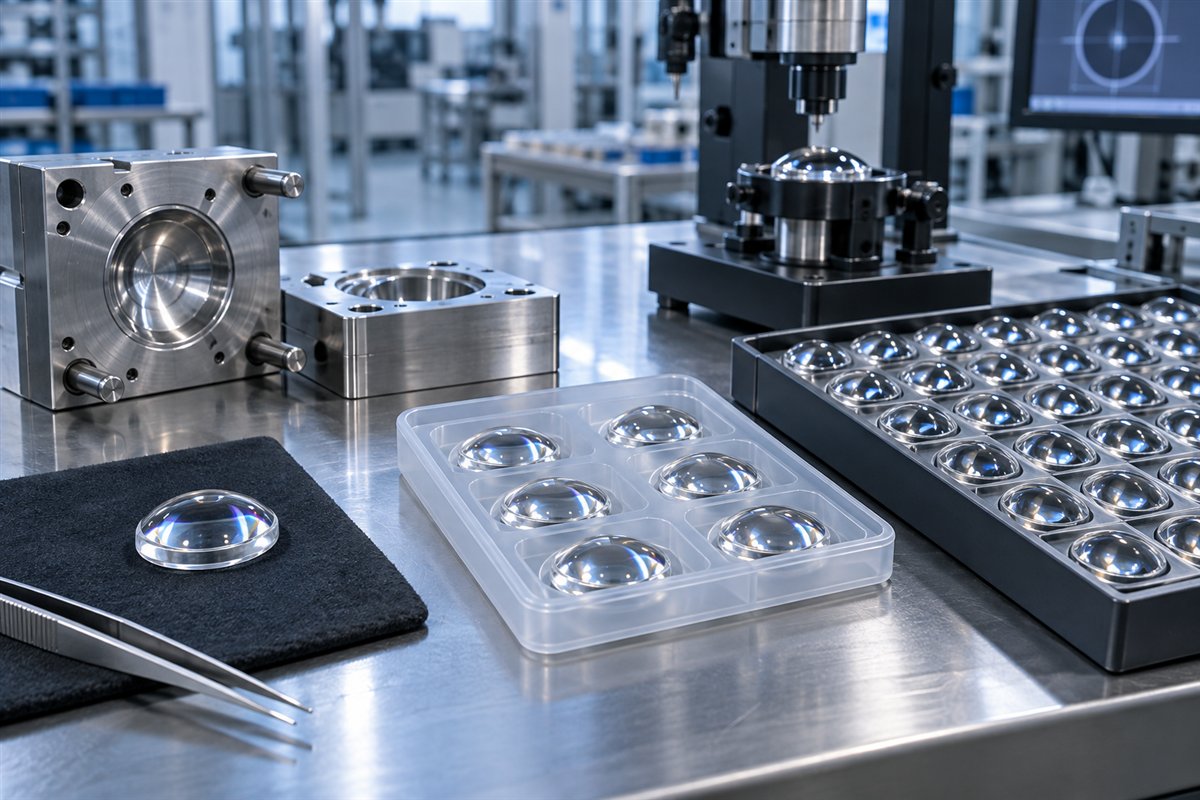
从光学原型到批量生产: 转移清单
9 月 15, 2026
Moving an optical component from prototype to mass production requires more than increasing quantity. The team must convert design intent, trial knowledge and test results into controlled drawings, tooling, processes and inspection methods. A structured transfer reduces late changes and unclear acceptance decisions. Freeze the Controlled Requirement Set Collect the released 3D model, optical drawing, material specification, coating requirement, assembly …
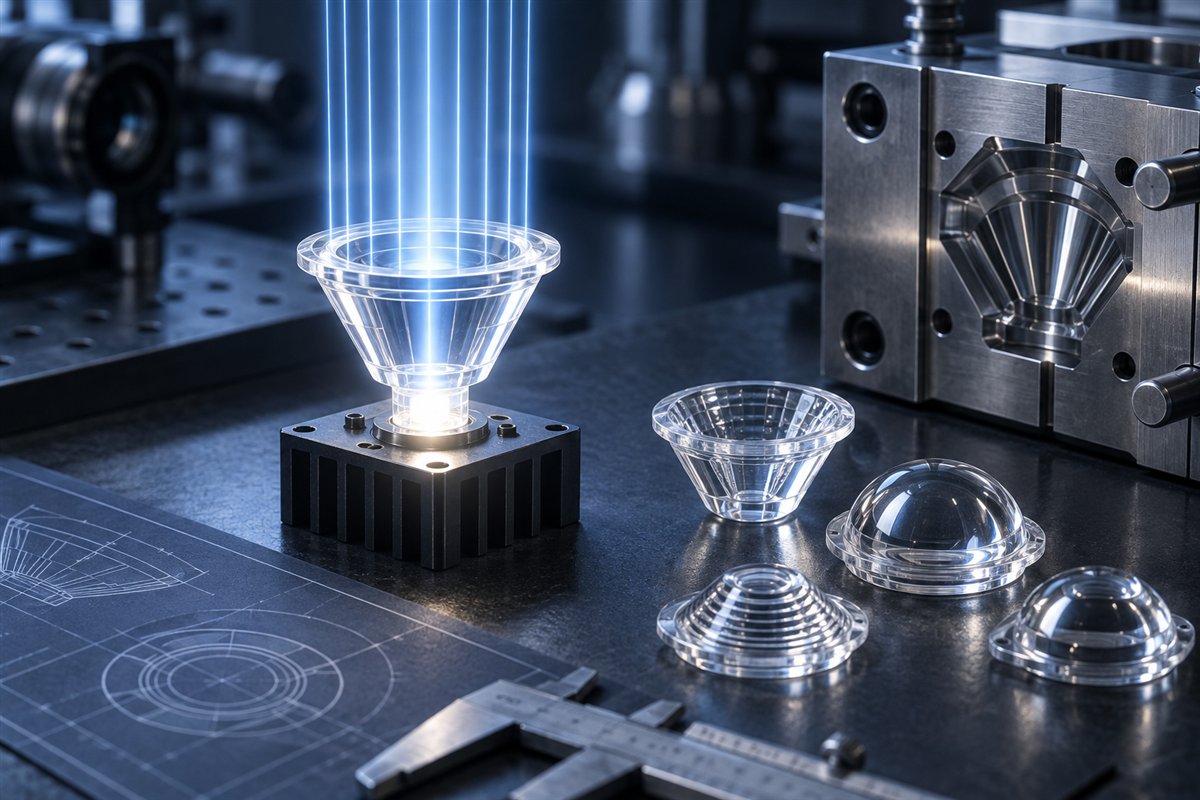
用于注塑生产的LED准直透镜设计
9 月 15, 2026
An LED collimator lens turns light from a finite source into a controlled beam. The final result depends on the LED emission pattern, source size, lens geometry, material, surface quality and assembly position. Designing for molded production early helps avoid a lens that performs in simulation but is difficult to tool, mold or align. Use Accurate LED Source Data Start …

汽车照明光学: 注塑组件的DFM检查清单
9 月 15, 2026
Molded automotive lighting optics must connect photometric performance with material behavior, tooling, assembly and environmental validation. Early DFM reduces the risk of redesign after the optical surfaces, mounting features and lamp package have already been fixed. Define the Lighting Function and Test Conditions State whether the component forms, spreads, guides or redirects light. Provide the LED source model, wavelength or …
Stray Light Control in Compact Imaging Systems
9 月 15, 2026
Stray light is any unintended light that reaches the detector or image plane. In compact cameras, machine-vision modules and sensing systems, it can lower contrast, create flare or ghost images and hide weak features. Good control requires cooperation between optical design, mechanical design, coating and manufacturing. Identify the Stray-Light Paths Begin with the intended field of view and the strongest …
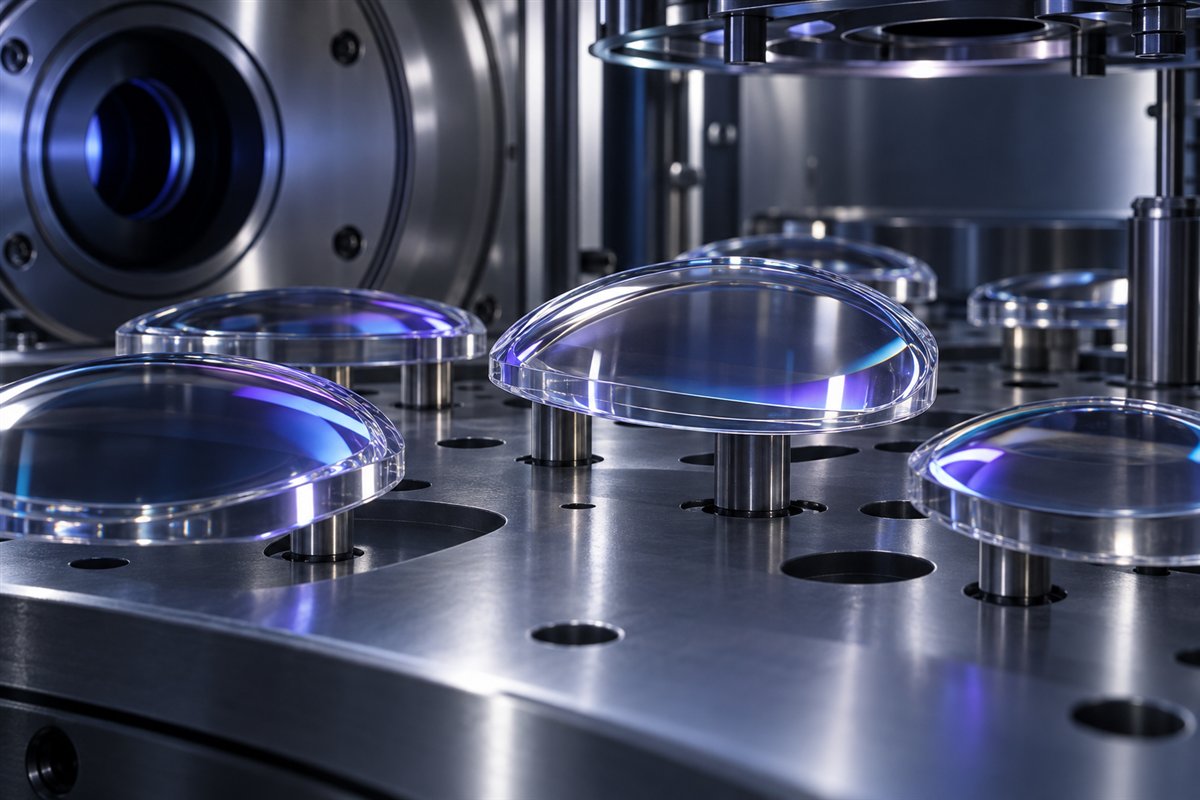
Anti-Reflection Coating for Plastic Lenses: Specification Guide
9 月 15, 2026
Anti-reflection coating can improve transmission and reduce unwanted reflections, but a useful specification must reflect the plastic substrate and the real operating environment. A coating developed for glass cannot automatically be transferred to a polymer lens because temperature limits, surface chemistry, moisture behavior and mechanical stress are different. Define the Substrate First State the exact resin family and grade whenever …
Optical Lens Tolerances: What to Specify on an RFQ
9 月 15, 2026
An optical lens RFQ is easier to quote and manufacture when the drawing separates performance-critical requirements from general preferences. Overly broad or unnecessarily tight tolerances can increase tooling, inspection and production cost without improving the final system. The goal is to define what the assembled optical system needs and give the supplier a clear method for verifying it. Separate Optical …
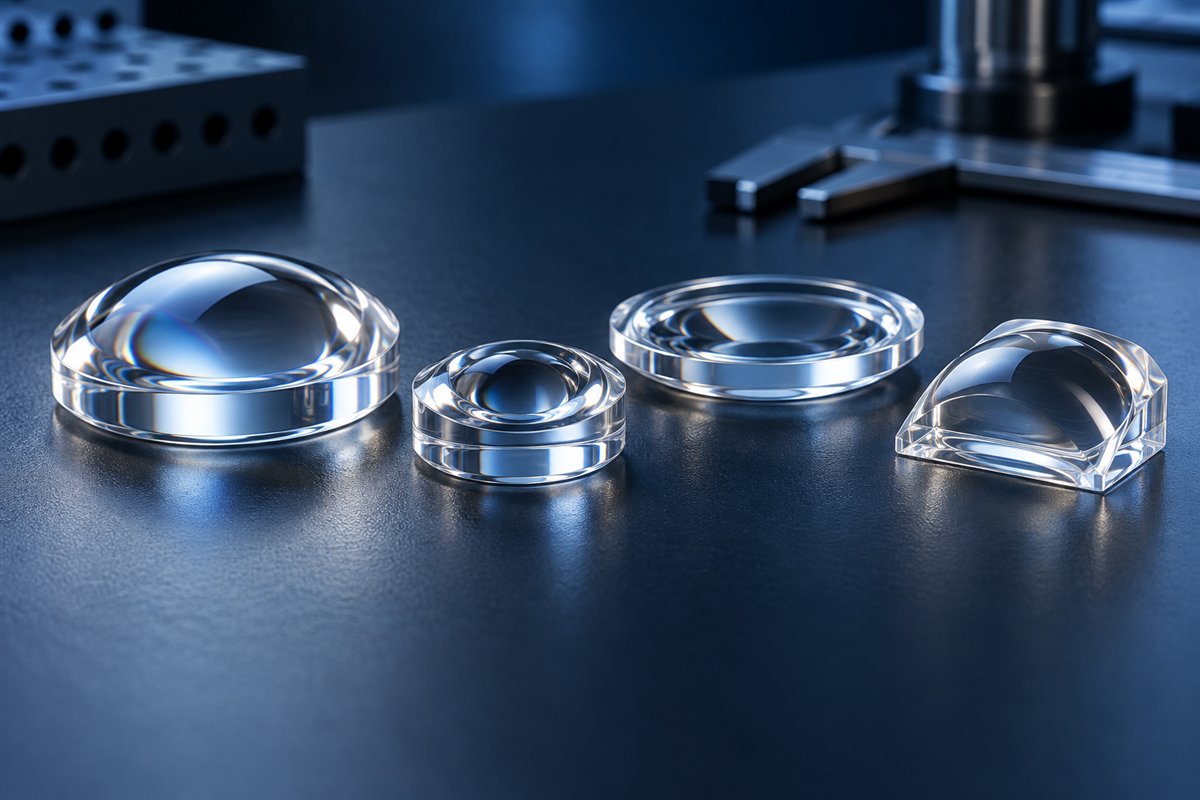
Optical Plastic Material Selection: PMMA, PC, COP and COC
9 月 15, 2026
Selecting an optical plastic is an engineering decision that affects optical performance, mechanical reliability, tooling, molding stability and total program cost. PMMA, polycarbonate (PC), cyclic olefin polymer (COP) and cyclic olefin copolymer (COC) can all be used for optical parts, but they solve different problems. This guide gives product engineers and sourcing teams a practical framework for comparing these materials …

Optical Coating for Glass Lenses: Design and RFQ Considerations
12 月 23, 2016
An optical coating request should connect the required spectral performance with the actual glass component, its operating environment and the agreed inspection method. A short request such as “AR coating required” leaves important questions unanswered. Clear input at the RFQ stage helps the coating and component teams review feasibility, measurement conditions and acceptance criteria together. Define the optical requirement first …

Aspheric Lens Design for Injection Molding: DFM Considerations
12 月 23, 2016
Designing an aspheric lens for injection molding requires optical performance and manufacturing feasibility to be reviewed together. A lens prescription may define the optical surfaces, but a production-ready request also needs material, mechanical, inspection and volume information. Bringing these inputs together early helps the engineering team evaluate tooling access, molding risks and the most practical validation route. Start with the …

服务 & 产能
资源
获取免费报价
复制©2025 | 银光学. | 版权所有
服务
